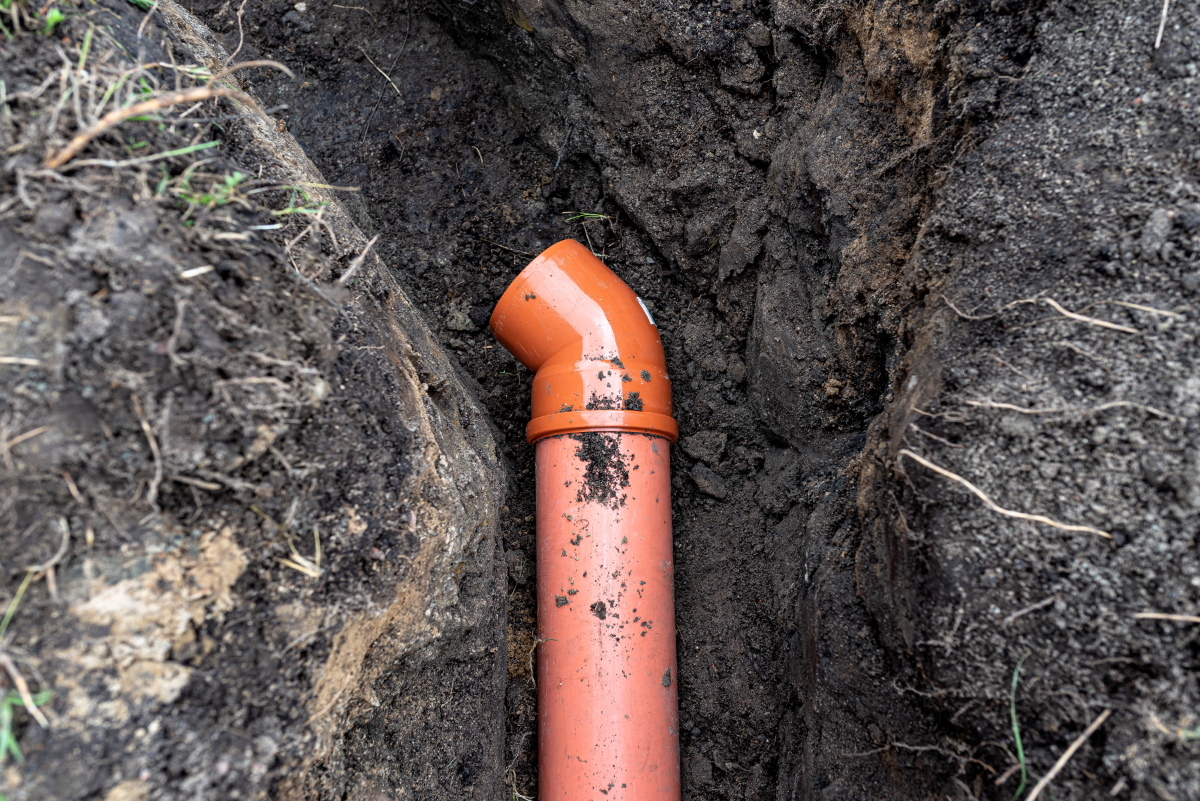
When a failure in a buried water line leaves your Winston-Salem, NC home out of water or service, you may have the option to choose trenchless or traditional water line repair or replacement. Here's how these methods differ. Trenchless vs. Traditional Methods for Repairing Underground Water Lines The Traditional Method Under the traditional dig-and-replace approach, the crew opens up the ground along the full run of the pipe, lifts out the deficient pipe bits, and lays down either a whole new one or a repaired section in the same corridor. Then the trench is backfilled, and the surface is rebuilt. The issue here is that a private service line that runs from your building's foundation toward the public main often crosses a lawn, a walkway, a driveway, and sometimes the public edge of pavement. That means each of those surfaces has to be cut, protected, and later patched and restored. To get this done, you'll need to work with a licensed underground contractor who can handle not just the pipe itself, but also getting the necessary permits, making the road cuts, dealing with traffic control, and pouring asphalt or concrete as well as potentially re-sodding your lawn. Why Do an Open Excavation at All? With those drawbacks, you might wonder why anyone would use this method, but there are definitely reasons to choose it. When the crew must be able to see the pipe, the soil, and any crossing utilities at the same time, this is the only method that works. If you've got a collapsed pipe section or a line that has drifted off its original grade, this can be the only option. Or, if you're dealing with a cluster of gas, electric, and communications lines sitting close to the water pipe, this can be a safer way. Trenchless Excavation This method uses no excavation or only minimal excavation and surface disruption, and it works on water mains as well as on sewers and gas lines. It doesn't interfere as much with traffic, businesses, and homes, and, in most cases, it has a lower overall cost than a comparable open trench. Pipe Bursting With this method, a bursting head is pulled through the old pipe, splitting it and pushing the pieces out into the soil, while a new pipe of the same size or larger is drawn in behind it on the same line. That is different from lining, which leaves the old pipe in place and only coats or sleeves the inside. Horizontal Boring Horizontal boring installs a new pipe through undisturbed soil between an entry point and an exit point, and it is the usual way to work when you have to cross under a road or a driveway without cutting up the surface. At JP Underground Connections, we use road cuts and bores together as needed and use a non-invasive approach when the site allows it. Get Help for Your Winston-Salem, NC Home If you've got a supply line that's leaking, aging, or already failed, contact JP Underground Connections for a site visit. We are based out of Kernersville and typically serve all areas within 45 minutes to an hour.